Saturday, November 17, 2018

Gender, Gender Identity, and Sexual Orientation in ECE

“The field of early childhood education has historically recommended best practices (Gomby, Larner, Stevenson, Lewit, & Behrman, 1995; McDonnell & Hardman, 1988). Such practices are developmental and often built on culturally-specific information and assumptions. According to the National Association for the Education of Young Children (NAEYC, 1996), developmentally appropriate practice (Bredekamp & Copple, 1997) is based on knowledge about how children develop and learn. For developmentally appropriate practices to be culturally relevant, we need to challenge our assumptions of how and at what age children learn as learning and development vary across cultural contexts” (Cope & Kalantzis, 2010).

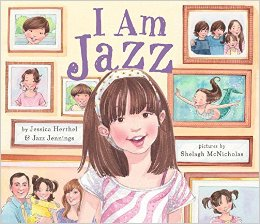
Homosexuality has been around since the beginning of time.  Egos wanting to control the masses created different religions where homosexuality is frown upon.  While I was growing up I never saw a book or a puzzle demonstrating gay and/or lesbian families. Time has changed.  In my classroom, we have books, posters, and other manipulatives embracing the LGBTQ community. Just like other forms of diversity, children and youth who identify as LGBTQ or who have LGBTQ families must see themselves and their lives/realities reflected in the curriculum they are immersed in every day. The school must reflect the diversity of the entire student population. How a school chooses to intentionally do this has direct and indirect implications on the integration and well being of members of the school community who are LGBTQ (Department of Mines and Resources, 2011).  
Not everybody is going to be comfortable with the inclusion of books depicting gay or lesbian individuals such as same-sex partnered families.  But, just because they are not comfortable with this notion, it doesn't mean that the rest of the world isn’t. Live and let live.
I have never felt comfortable with the word “fag” and I never knew that “tomboy” related or was coined for lesbian.  I used to consider myself a little of a tomboy, being the only girl and wanting to be exactly like my older brother, but I did not see how that term coined my sexuality.  I know people who use the word “fag” so freely and are opposed to their children being gay, “but love gay people”. Some people will never change and have strong opinions when it comes to homosexuality.  For to be free is not merely to cast off one’s chains, but to live in a way that respects and enhances the freedom of others~ Nelson Mandela.

Some books that celebrate diversity


Reference
Department of Mines and Resources. (2011). Campobello, New Brunswick. https://doi.org/10.4095/213337

Saturday, May 19, 2018

Personal Research Journey

Image result for quotes about jealousy in children                  Childhood trauma does not come in one single package Picture Quote #1


I was very intimidated by this course and was almost on the verge of dropping the class, I was feeling overwhelmed by the word "research", but as I emerged myself into my studies, reading the Research Method: The Essential Knowledge Base by William Trochim and our weekly discussion, my understanding and overcoming my fears of embarking something I felt was out of my element, has ease my thoughts.

The social/emotional development was something that was very new to me until I started working for a Head Start program and through my education journey.   Through my observation of my students this school year I started to notice the "green eye" starting to circulate around my 3-5-year-old students.  This led me to my decision on focusing my research on jealousy in preschool children ages 4-5.  Young children at this age are starting to realize differences and similarities in all aspect of the world around them. "Relationships, sex, different people of a different race; all these big social issues become visible to your 4-year-old", http://www.healthywa.wa.gov.au/Articles/A_E/Child-development-4-5-years.  I chose this topic because I want to have a better understanding of how to help and support regulation of emotions in young children.  Girls and boys both display this emotion but through some of my research, society tends to always advertise and objectify girls and women as displaying this emotion through books, songs, commercials, movies, television shows, and even articles and seem to go a different route when it comes to boys and men. I hope to come to a much better understanding of how young children regulates their emotions and create a pretend causal-relationship research.

As we embark on this personal research journey I hope to gain knowledge, wisdom, and understanding of all aspects of the early childhood field.  As I was reading our weekly discussion, I came across a research topic that one of my colleagues chose to research which was how to implement the spiritual side of young children and how mindfulness and children well-being is equally important and should be addressed into our practices as educators and serving, providing and supporting the whole-child.  I wish I would have thought of first this topic first, but I hope to gain incredible insights through my colleagues sharing of information.

Reference

http://www.healthywa.wa.gov.au/Articles/A_E/Child-development-4-5-years